




The Daily Star
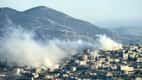
A little late to the game, the Lebanese Army warned Friday of a plot underway to bring the Syrian civil war across its borders, amid the latest round of violence in Tripoli. It seems a little surprising that it has taken them so long to realize this, but now they have, all efforts must be made to contain the fighting, before it gets even more out of control.
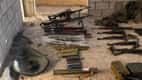
In Lebanon’s second city, a plethora of unchecked arms is exacerbating an already unstable situation, in a vacuum of institutional authority. Wanted men chat to the media with no apparent fear of being apprehended, and politicians sit down to discussions with these same criminals.
On some levels it appears that those seeking to divide Tripoli - once a symbol of coexistence - have succeeded. One local sheikh recently compared the city to Kandahar, a twinning which will undoubtedly worry any resident not prone to carrying arms.
Now, at perhaps the 17th round of fighting, the Army has recognized that there is a concerted effort to spread Syrian instability across Lebanon. While this recognition is a welcome development, and might hopefully help efforts to return stability to the city, it must also be noted that it is not one party behind this plot, but various groups and actors.
Tripoli is being used as a vehicle through which to send messages, both local and regional, and as a conduit through which to vent anger. Syria’s war obviously has a key role here, but guns are being used to cement the power of certain individuals and groups within the city. All the while Tripoli is paralyzed, on a commercial and social level. As capital of the north, thousands of people are being denied access to municipal or any official services. Meanwhile, dozens of people are being killed, and the city’s residents are living in fear, the atmosphere fraught with danger.
It appears the Army is now stepping up its involvement in the city, entering into previously forbidden zones taken by various militias as their own ground. During every other round of fighting, the Army has claimed it did not have “political cover” enough to truly assert its control of the city. When the last remaining national institution in which the people can trust and believe cannot even do its job for want of political support, this is a worrying time.
The Army should not need “cover” from anybody, it should be able, and willing, to do its job, which is to protect the citizens of this country from violence and aggression.
Having heard similar promises of the restoration of peace at earlier rounds of fighting, it would be a surprise, albeit a welcome one, if the Army was able to maintain the calm now. But it must try as hard as it can to do so, as left to burn, the city’s conflicts will ignite further fires across the country.
In Lebanon’s second city, a plethora of unchecked arms is exacerbating an already unstable situation, in a vacuum of institutional authority. Wanted men chat to the media with no apparent fear of being apprehended, and politicians sit down to discussions with these same criminals.
On some levels it appears that those seeking to divide Tripoli - once a symbol of coexistence - have succeeded. One local sheikh recently compared the city to Kandahar, a twinning which will undoubtedly worry any resident not prone to carrying arms.
Now, at perhaps the 17th round of fighting, the Army has recognized that there is a concerted effort to spread Syrian instability across Lebanon. While this recognition is a welcome development, and might hopefully help efforts to return stability to the city, it must also be noted that it is not one party behind this plot, but various groups and actors.
Tripoli is being used as a vehicle through which to send messages, both local and regional, and as a conduit through which to vent anger. Syria’s war obviously has a key role here, but guns are being used to cement the power of certain individuals and groups within the city. All the while Tripoli is paralyzed, on a commercial and social level. As capital of the north, thousands of people are being denied access to municipal or any official services. Meanwhile, dozens of people are being killed, and the city’s residents are living in fear, the atmosphere fraught with danger.
It appears the Army is now stepping up its involvement in the city, entering into previously forbidden zones taken by various militias as their own ground. During every other round of fighting, the Army has claimed it did not have “political cover” enough to truly assert its control of the city. When the last remaining national institution in which the people can trust and believe cannot even do its job for want of political support, this is a worrying time.
The Army should not need “cover” from anybody, it should be able, and willing, to do its job, which is to protect the citizens of this country from violence and aggression.
Having heard similar promises of the restoration of peace at earlier rounds of fighting, it would be a surprise, albeit a welcome one, if the Army was able to maintain the calm now. But it must try as hard as it can to do so, as left to burn, the city’s conflicts will ignite further fires across the country.