






President of the Republic Joseph Aoun informed Anne-Claire Legendre, Political Advisor to French President Emmanuel Macron, during their meeting at Baabda Palace, attended by French Ambassador Hervé Magro, that the Lebanese Army’s inability to complete its deployment south of the Litani to the international border is due to the continued Israeli occupation of Lebanese territory, ongoing hostilities, and Israel’s failure to implement the November 2024 agreement.
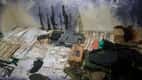
Aoun stressed that, despite these obstacles, the army continues its operations in areas where it is deployed, including seizing weapons and munitions, uncovering tunnels and depots, and extending full state authority in accordance with UNSCR 1701 and the government-mandated security plan.
Moreover, the President rejected Israeli accusations against the army, describing them as “baseless campaigns aimed at undermining an institution supported by all Lebanese.” He noted that 12 soldiers have been martyred while carrying out their duties.
Aoun underscored that moral support alone is insufficient, stressing the army’s urgent need for equipment and military vehicles, and welcomed French efforts, alongside the United States and Saudi Arabia, to convene an international support conference for the Lebanese Armed Forces, as well as an international reconstruction conference to enable displaced southerners to return to their destroyed villages. Reconstruction, he emphasized, is impossible amid continued daily Israeli attacks on civilians and infrastructure.
The president expressed astonishment that some states adopt Israel’s narrative about Lebanon’s alleged non-compliance with the 2024 agreement while ignoring Israel’s ongoing violations and disregard for the will of the international community, including the agreement’s French and American sponsors.
Highlighting the confidence between the army and southern communities, Aoun stressed the importance of reinforcing this trust, especially as the army is expected to assume full security responsibilities in the south one year from now, when UNIFIL begins its withdrawal in early 2026. He welcomed any European role in stabilizing the south post-UNIFIL, noting the army’s planned increase to 10,000 troops in the area despite the region’s challenging terrain.
Aoun reminded Legendre that the army’s responsibilities extend nationwide, protecting borders, combating terrorism, weapons and drug smuggling, and preserving civil peace, underscoring the need for sustained international support.
Responding to Legendre’s inquiries, he reaffirmed that negotiation is Lebanon’s strategic choice, as “continued aggression leads nowhere,” and stressed that external support, especially from France and the United States, can reinforce meaningful progress, with the mechanism committee serving as a potential channel for such talks.
Discussions also covered reform efforts, which Aoun described as a Lebanese priority, with several financial, economic, and social laws already passed and more underway. Talks further addressed Lebanese–Syrian relations, border demarcation, land and maritime, and France’s potential role given the documents and maps at its disposal.
Legendre conveyed President Macron’s greetings and reaffirmed France’s commitment to supporting Lebanon, advancing reconstruction efforts, and strengthening the Lebanese Army, while working to stabilize the south and activate the mechanism in line with Lebanon’s expectations.
Aoun stressed that, despite these obstacles, the army continues its operations in areas where it is deployed, including seizing weapons and munitions, uncovering tunnels and depots, and extending full state authority in accordance with UNSCR 1701 and the government-mandated security plan.
Moreover, the President rejected Israeli accusations against the army, describing them as “baseless campaigns aimed at undermining an institution supported by all Lebanese.” He noted that 12 soldiers have been martyred while carrying out their duties.
Aoun underscored that moral support alone is insufficient, stressing the army’s urgent need for equipment and military vehicles, and welcomed French efforts, alongside the United States and Saudi Arabia, to convene an international support conference for the Lebanese Armed Forces, as well as an international reconstruction conference to enable displaced southerners to return to their destroyed villages. Reconstruction, he emphasized, is impossible amid continued daily Israeli attacks on civilians and infrastructure.
The president expressed astonishment that some states adopt Israel’s narrative about Lebanon’s alleged non-compliance with the 2024 agreement while ignoring Israel’s ongoing violations and disregard for the will of the international community, including the agreement’s French and American sponsors.
Highlighting the confidence between the army and southern communities, Aoun stressed the importance of reinforcing this trust, especially as the army is expected to assume full security responsibilities in the south one year from now, when UNIFIL begins its withdrawal in early 2026. He welcomed any European role in stabilizing the south post-UNIFIL, noting the army’s planned increase to 10,000 troops in the area despite the region’s challenging terrain.
Aoun reminded Legendre that the army’s responsibilities extend nationwide, protecting borders, combating terrorism, weapons and drug smuggling, and preserving civil peace, underscoring the need for sustained international support.
Responding to Legendre’s inquiries, he reaffirmed that negotiation is Lebanon’s strategic choice, as “continued aggression leads nowhere,” and stressed that external support, especially from France and the United States, can reinforce meaningful progress, with the mechanism committee serving as a potential channel for such talks.
Discussions also covered reform efforts, which Aoun described as a Lebanese priority, with several financial, economic, and social laws already passed and more underway. Talks further addressed Lebanese–Syrian relations, border demarcation, land and maritime, and France’s potential role given the documents and maps at its disposal.
Legendre conveyed President Macron’s greetings and reaffirmed France’s commitment to supporting Lebanon, advancing reconstruction efforts, and strengthening the Lebanese Army, while working to stabilize the south and activate the mechanism in line with Lebanon’s expectations.