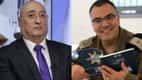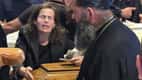







A ceremony marking the return of the displaced to their hometown of Brih was held earlier on Saturday as part of reconciliation efforts between the Christians and the Druze of Chouf, that were given momentum following the 2001 historic visit paid by former Maronite Patriarch Nasrallah Boutros Sfeir.
The event, held under the patronage of President Michel Sleiman, drew crowds from different sects and religious groups in Lebanon, which all gathered in Brih, one of the Chouf villages that had witnessed bloody clashes in 1983.
The head of state, Maronite Patriarch Bechara al-Rahi and Progressive Socialist Party leader Walid Jumblat, Minister of the Displaced Alice Chabtini, as well as several other lawmakers, officials and dignitaries, all took part in the celebration.
Sleiman stated that past ordeals proved the need to steer clear of regional conflicts as he renewed commitment to the Baabda declaration and called on local factions to withdraw from neighboring battlefields.
"A unified state whose army alone controls arms is capable of defending the nation," he stressed, urging local rivals to abide by decisions taken during the National Dialogue sessions.
As for his part, Maronite Patriarch Bechara al-Rahi, who took part in the celebration along with a delegation of priests and bishops, thanked President Sleiman for sponsoring the reconciliation and told him to rest assured now that he has fulfilled his role.
"May your mind be at ease as you are handing over the reins to the new president," said al-Rahi, voicing hope that a new president would be elected by May 25.
"We call on Lebanese to renew their national pact that preserves everyone's interest and hope that reconciliation would finally occur between March 8 and 14," he added.
The patriarch called for a president "who would be able to spread reconciliation throughout Lebanon by defeating the war of petty interests".
Al-Rahi saluted efforts exerted by MP Walid Jumblat and other ministers that have successively presided over the ministry of the Displaced, describing the ceremony as a completion of Patriarch Sfeir's initial reconciliation.
Progressive Socialist Party leader Walid Jumblat, who had repeatedly voiced his keenness on moving forward from past transgressions, saluted Maronite Patriarch Bechara al-Rahi's efforts to preserve the land, reiterating the significant role that Christians are playing in Lebanon and the Middle East.
At the beginning of his speech, Jumblat made a gaffe as he mistakenly addressed President Michel Sleiman by the name of Free Patriotic Movement leader Michel Aoun.
“This is because we have been having frequent dreams of him (Aoun),” the lawmaker said as he rushed to conceal his slip of tongue.
“This doesn't mean that he is going to be elected (as president) ,” he added jokingly.
Addressing President Sleiman, Jumblat deplored the failure to abide by the Baabda Declaration, stressing that centrism has contributed to asserting the state's authority as it has proven to be the ultimate option.
"We understand your grief over the failure to abide by the Baabda declaration," said Jumblat in an address to President Sleiman.
"Today's celebration will put an end to the divisions of the past and restore ties between the two sides," the Druze leader affirmed, noting that the ceremony heralds the beginning of the march towards reconciliation, coexistence, and harmony and the commitment towards the country.
The ceremony later witnessed the laying of the foundation stone of the Saint Georges and Saint Elias churches as the symbolic "Village House", intended to represent multi-confessional coexistence, was also inaugurated.