Behind EU lawmakers' challenge to rein in ChatGPT and generative AI

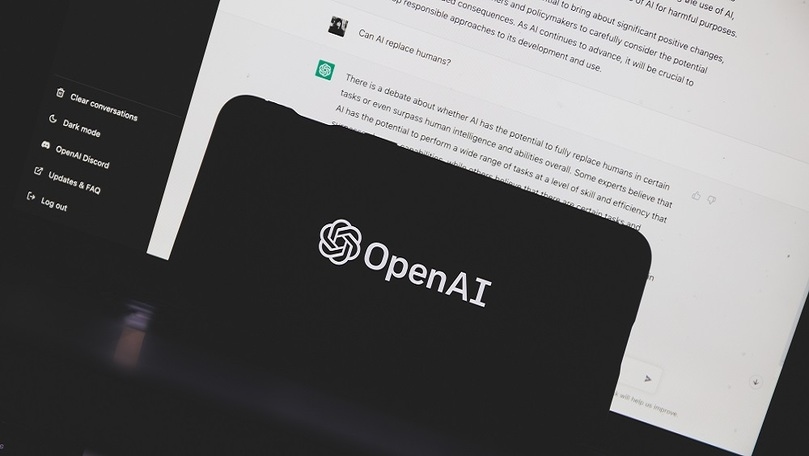
As recently as February, generative AI did not feature prominently in EU lawmakers' plans for regulating artificial intelligence technologies such as ChatGPT.The bloc's 108-page proposal for the AI Act, published two years earlier, included only one mention of the word "chatbot." References to AI-generated content largely referred to deepfakes: images or audio designed to impersonate human beings.By mid-April, however, members of European Parliament (MEPs) were racing to update those rules to catch up with an explosion of interest in generative AI, which has provoked awe and anxiety since OpenAI unveiled ChatGPT six months ago.That scramble culminated on Thursday with a new draft of the legislation which identified copyright protection as a core piece of the effort to keep AI in check.Interviews with four lawmakers and two other sources close to discussions reveal for the first time how over just 11 days this small group of politicians hammered out what could become landmark legislation, reshaping the regulatory landscape for OpenAI and its competitors.The draft bill is not final and lawyers say it will likely take years to come into force.The speed of their work, though, is also a rare example of consensus in Brussels, which is often criticised for the slow pace of decision-making.LAST-MINUTE CHANGESSince launching in November, ChatGPT has become the fastest growing app in history, and sparked a flurry of activity from Big Tech competitors and investment in generative AI startups like Anthropic and Midjourney.The runaway popularity of such applications led EU industry chief Thierry Breton and others to call for regulation of ChatGPT-like services.An organisation backed by Elon Musk, the billionaire CEO of Tesla Inc (TSLA.O) and Twitter, took it up a notch by issuing a letter warning of existential risk from AI and calling for stricter regulations.On April 17, the dozen MEPs involved in drafting the legislation signed an open letter agreeing with some parts of Musk's letter and urged world leaders to hold a summit to find ways to control the development of advanced AI.That same day, however, two of them - Dragos Tudorache and Brando Benifei - proposed changes that would force companies with generative AI systems to disclose any copyrighted material used to train their models, according to four sources present at the meetings, who requested anonymity due to the sensitivity of the discussions.That tough new proposal received cross-party support, the sources said.One proposal by conservative MEP Axel Voss - forcing companies to request permission from rights holders before using the data - was rejected as too restrictive and something that could hobble the emerging industry.After thrashing out the details over the next week, the EU outlined proposed laws that could force an uncomfortable level of transparency on a notoriously secretive industry."I must admit that I was positively surprised on how we converged rather easily on what should be in the text on these models," Tudorache told Reuters on Friday."It shows there is a strong consensus, and a shared understanding on how to regulate at this point in time."The committee will vote on the deal on May 11 and if successful, it will advance to the next stage of negotiation, the trilogue, where EU member states will debate the contents with the European Commission and Parliament."We are waiting to see if the deal holds until then," one source familiar with the matter said.BIG BROTHER VS. THE TERMINATORUntil recently, MEPs were still unconvinced that generative AI deserved any special consideration.In February, Tudorache told Reuters that generative AI was "not going to be covered" in-depth. "That's another discussion I don't think we are going to deal with in this text," he said.Citing data security risks over warnings of human-like intelligence, he said: "I am more afraid of Big Brother than I am of the Terminator."But Tudorache and his colleagues now agree on the need for laws specifically targeting the use of generative AI.Under new proposals targeting "foundation models," companies like OpenAI, which is backed by Microsoft Corp (MSFT.O), would have to disclose any copyrighted material - books, photographs, videos and more - used to train their systems.Claims of copyright infringement have rankled AI firms in recent months with Getty Images suing Stable Diffusion for using copyrighted photos to train its systems. OpenAI has also faced criticism for refusing to share details of the dataset used to train its software."There have been calls from outside and inside the Parliament for a ban or classifying ChatGPT as high-risk," said MEP Svenja Hahn. "The final compromise is innovation-friendly as it does not classify these models as 'high risk,' but sets requirements for transparency and quality."

29-04-2023 13:47

Behind EU lawmakers' challenge to rein in ChatGPT and generative AI

As recently as February, generative AI did not feature prominently in EU lawmakers' plans for regulating artificial intelligence technologies such as ChatGPT.The bloc's 108-page proposal for the AI Act, published two years earlier, included only one mention of the word "chatbot." References to AI-generated content largely referred to deepfakes: images or audio designed to impersonate human beings.By mid-April, however, members of European Parliament (MEPs) were racing to update those rules to catch up with an explosion of interest in generative AI, which has provoked awe and anxiety since OpenAI unveiled ChatGPT six months ago.That scramble culminated on Thursday with a new draft of the legislation which identified copyright protection as a core piece of the effort to keep AI in check.Interviews with four lawmakers and two other sources close to discussions reveal for the first time how over just 11 days this small group of politicians hammered out what could become landmark legislation, reshaping the regulatory landscape for OpenAI and its competitors.The draft bill is not final and lawyers say it will likely take years to come into force.The speed of their work, though, is also a rare example of consensus in Brussels, which is often criticised for the slow pace of decision-making.LAST-MINUTE CHANGESSince launching in November, ChatGPT has become the fastest growing app in history, and sparked a flurry of activity from Big Tech competitors and investment in generative AI startups like Anthropic and Midjourney.The runaway popularity of such applications led EU industry chief Thierry Breton and others to call for regulation of ChatGPT-like services.An organisation backed by Elon Musk, the billionaire CEO of Tesla Inc (TSLA.O) and Twitter, took it up a notch by issuing a letter warning of existential risk from AI and calling for stricter regulations.On April 17, the dozen MEPs involved in drafting the legislation signed an open letter agreeing with some parts of Musk's letter and urged world leaders to hold a summit to find ways to control the development of advanced AI.That same day, however, two of them - Dragos Tudorache and Brando Benifei - proposed changes that would force companies with generative AI systems to disclose any copyrighted material used to train their models, according to four sources present at the meetings, who requested anonymity due to the sensitivity of the discussions.That tough new proposal received cross-party support, the sources said.One proposal by conservative MEP Axel Voss - forcing companies to request permission from rights holders before using the data - was rejected as too restrictive and something that could hobble the emerging industry.After thrashing out the details over the next week, the EU outlined proposed laws that could force an uncomfortable level of transparency on a notoriously secretive industry."I must admit that I was positively surprised on how we converged rather easily on what should be in the text on these models," Tudorache told Reuters on Friday."It shows there is a strong consensus, and a shared understanding on how to regulate at this point in time."The committee will vote on the deal on May 11 and if successful, it will advance to the next stage of negotiation, the trilogue, where EU member states will debate the contents with the European Commission and Parliament."We are waiting to see if the deal holds until then," one source familiar with the matter said.BIG BROTHER VS. THE TERMINATORUntil recently, MEPs were still unconvinced that generative AI deserved any special consideration.In February, Tudorache told Reuters that generative AI was "not going to be covered" in-depth. "That's another discussion I don't think we are going to deal with in this text," he said.Citing data security risks over warnings of human-like intelligence, he said: "I am more afraid of Big Brother than I am of the Terminator."But Tudorache and his colleagues now agree on the need for laws specifically targeting the use of generative AI.Under new proposals targeting "foundation models," companies like OpenAI, which is backed by Microsoft Corp (MSFT.O), would have to disclose any copyrighted material - books, photographs, videos and more - used to train their systems.Claims of copyright infringement have rankled AI firms in recent months with Getty Images suing Stable Diffusion for using copyrighted photos to train its systems. OpenAI has also faced criticism for refusing to share details of the dataset used to train its software."There have been calls from outside and inside the Parliament for a ban or classifying ChatGPT as high-risk," said MEP Svenja Hahn. "The final compromise is innovation-friendly as it does not classify these models as 'high risk,' but sets requirements for transparency and quality."

29-04-2023 13:47

Dollar slips as Fed outlook shifts

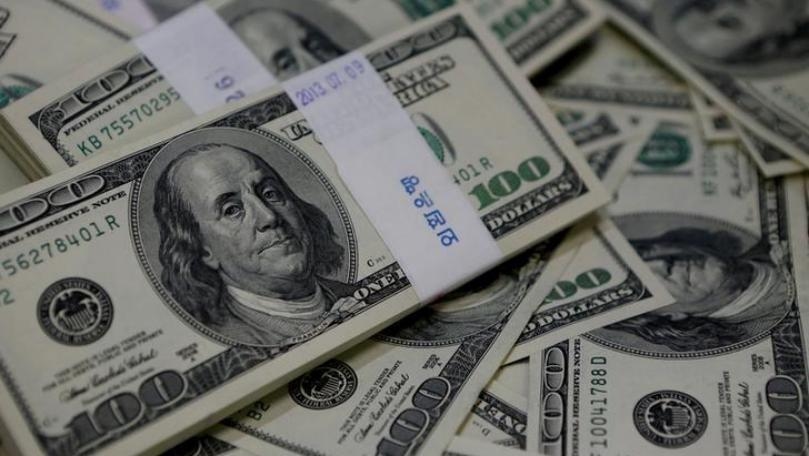
The dollar was under pressure near seven-week lows on Thursday after the U.S. Federal Reserve sounded close to calling time on interest rate hikes, which markets think are more or less over.The Fed raised its benchmark funds rate by 25 basis points, as expected, but dropped language about "ongoing increases" being needed in favour of "some additional" rises, as it watches how wobbling confidence in banks affects the economy.Futures imply only an even chance of one more hike, in contrast to Europe where markets see another 50 bps or so to go. The gap has sent the euro surging, with it touching a seven-week high of $1.0912 on Wednesday and coming close to testing it again at $1.0898 in the Asia session.Sterling also hovered near a seven-week high as British inflation unexpectedly rose, leaving it at an eye-watering 10.4% and heaping pressure on the Bank of England to raise rates and sound hawkish at its meeting later in the day.Markets have priced a 25-bp hike from the BoE.Traders also expect a 50 bp hike at the Swiss National Bank, which has the franc recovering from a slide it suffered at troubles at Credit Suisse had traders nervous.The shift in tone from the Fed makes it less likely that markets go back to worrying that strong economic data drives rates higher, said NatWest Markets head of G10 FX strategy Brian Daingerfield."From the foreign exchange perspective, we think that argues for further dollar weakness as the ceiling for the Fed cycle has clearly come down."The dollar had earlier found a footing when U.S. Treasury Secretary Janet Yellen spooked markets by telling Congress she has not considered or discussed blanket bank deposit insurance.But that mostly reversed in Asia.The Australian and New Zealand dollars rose 0.7% and 0.8% respectively to track back toward Wednesday's peaks. Dollar/yen, which closely follows U.S. yields, fell 0.7% to a six-week low of 130.50. Two-year U.S. Treasury yields fell 11 bps, extending a drop of about 20 bps on Wednesday.Financial markets have been roiled by wavering confidence in banks globally following a run on Silicon Valley Bank two weeks ago and the sudden demise of Credit Suisse.The focus on the banking front is now primarily on U.S. regional lenders where worry of a contagious run on deposits remains elevated.Fed Chair Jerome Powell said deposit flows have stabilised in the last week, and smaller lenders said they took some comfort from Yellen's remarks that deposit insurance would be considered were there to be a contagion risk.That "took the anxiety out of the room," according to Daniel Kimbell, an executive at the local Passumpsic Bank in St Johnsbury, Vermont. Regional lenders shares, however, fell.Bitcoin fell 3% to $27,360 on Wednesday and was held near level on Thursday after a series of U.S. Securities and Exchange Commission lawsuits over crypto promotion put a dampener on digital assets.

23-03-2023 10:29

{{ article.title }}

{{safeHTML(article.Text)}}

{{ formatCategoryDate(article.publishDate) }}

Article Image

المزيد

Dollar slips as Fed outlook shifts

The dollar was under pressure near seven-week lows on Thursday after the U.S. Federal Reserve sounded close to calling time on interest rate hikes, which markets think are more or less over.The Fed raised its benchmark funds rate by 25 basis points, as expected, but dropped language about "ongoing increases" being needed in favour of "some additional" rises, as it watches how wobbling confidence in banks affects the economy.Futures imply only an even chance of one more hike, in contrast to Europe where markets see another 50 bps or so to go. The gap has sent the euro surging, with it touching a seven-week high of $1.0912 on Wednesday and coming close to testing it again at $1.0898 in the Asia session.Sterling also hovered near a seven-week high as British inflation unexpectedly rose, leaving it at an eye-watering 10.4% and heaping pressure on the Bank of England to raise rates and sound hawkish at its meeting later in the day.Markets have priced a 25-bp hike from the BoE.Traders also expect a 50 bp hike at the Swiss National Bank, which has the franc recovering from a slide it suffered at troubles at Credit Suisse had traders nervous.The shift in tone from the Fed makes it less likely that markets go back to worrying that strong economic data drives rates higher, said NatWest Markets head of G10 FX strategy Brian Daingerfield."From the foreign exchange perspective, we think that argues for further dollar weakness as the ceiling for the Fed cycle has clearly come down."The dollar had earlier found a footing when U.S. Treasury Secretary Janet Yellen spooked markets by telling Congress she has not considered or discussed blanket bank deposit insurance.But that mostly reversed in Asia.The Australian and New Zealand dollars rose 0.7% and 0.8% respectively to track back toward Wednesday's peaks. Dollar/yen, which closely follows U.S. yields, fell 0.7% to a six-week low of 130.50. Two-year U.S. Treasury yields fell 11 bps, extending a drop of about 20 bps on Wednesday.Financial markets have been roiled by wavering confidence in banks globally following a run on Silicon Valley Bank two weeks ago and the sudden demise of Credit Suisse.The focus on the banking front is now primarily on U.S. regional lenders where worry of a contagious run on deposits remains elevated.Fed Chair Jerome Powell said deposit flows have stabilised in the last week, and smaller lenders said they took some comfort from Yellen's remarks that deposit insurance would be considered were there to be a contagion risk.That "took the anxiety out of the room," according to Daniel Kimbell, an executive at the local Passumpsic Bank in St Johnsbury, Vermont. Regional lenders shares, however, fell.Bitcoin fell 3% to $27,360 on Wednesday and was held near level on Thursday after a series of U.S. Securities and Exchange Commission lawsuits over crypto promotion put a dampener on digital assets.

23-03-2023 10:29

{{ article.title }}

{{safeHTML(article.Text)}}

{{ formatCategoryDate(article.publishDate) }}

Article Image

المزيد