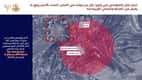






Security sources told al-Markaziyya news agency that one of Jund al-Sham figureheads, identified as Bilal Bader, has ordered for the first time the deployment of guards, affiliated to the group, along the borders of the al-Tawarii neighborhood.
According to the same sources, such decision either reflects the Jund al-Sham fears of potential attack targeting it, or portends the group’s intention to wage an assault against the Taamir neighborhood, one of the Resistance Brigades’ turfs within the Ain el-Helwe camp.
Consequently, the Lebanese Army rushed to reinforce its preemptive measures at the entrances of the said camp.
The sources also confirmed that Fadel Shaker is taking refuge in al-Tawarii neighborhood inside Ain el-Helwe camp, deeming the denying statements issued by the Palestinian Islamic forces only aim to distract attention away from the said camp which is regarded as the “fugitives’ haven”.
Palestinian sources claimed that Fadel Shaker was repeatedly seen taking a walk inside al-Tawarii neighborhood, escorted by the area’s Jund al-Sham “emir” Haytham al-Shaabi.
In this same context, security sources said that Fadel Shaker is actually funding the Jund al-Sham group, which he is deemed one of its founders, headed by his brother Abou el-Abed Shmandour.
The sources reported that the group has managed to acquire medium-caliber weapons and gained more members, building up to 250 militants, as the supporters of Ahmad al-Assir took refuge in the al-Tawarii neighborhood in the aftermath of the Abra clashes, noting that a significant number is deemed as fugitive.
Informed sources reported that one of the Esbat al-Ansar figureheads Abou Tareq al-Saadi, alias Abu Mohjen, delivered a speech on the occasion of Eid al-Fitr, claiming he had challenged Hezbollah.
According to the sources, al-Saadi harked back to the Abra clashes, claiming that Ain el-Helwe camp was pound by forces positioned at Mar Elias hill in Sidon throughout a three-day period, insinuating at Hezbollah’s controversial involvement in the said incidents.
“We could have slaughtered them but we were keen on maintaining our camp and people’s security,” the sources quoted al-Saadi as saying.
Esbat al-Ansar was established in the late 1980s, after splitting from Al-Jamaa Al-Islamiyya, the Lebanese branch of the Muslim Brotherhood. It is made up of Lebanese and Palestinians.
Esbat's founder, Hisham Shreidi, a former leader of Al-Jamaa Al-Islamiyya, was killed in 1991, apparently on the orders of Amin Kayid, the commander of Yasser Arafat's Fatah movement in Ain al-Hilweh refugee camp.
Shreidi was replaced by Ahmad Abdel-Karim Saadi, known as Abu Mohjen.
The group gained notoriety in 1994 for assassinating Sheikh Nizar Halabi, the head of the Association of Islamic Philanthropic Projects, also known as Al-Ahbash.
Three members of Esbat al-Ansar were tried, convicted and executed for the murder, and Abu Mohjen was sentenced to death in absentia.
Esbat is thought responsible for the killing of four judges in a Saida court room in June 1999 in revenge for the executions.
Esbat al-Ansar is located in Ain al-Hilweh Palestinian refugee camp, Saida and is closely tied to Fatah al-Islam with some members of the former joining the latter after it announced its existence in November 2006.
It is classified by the United States as an international terrorist organization.