Ancient Carved Faces in Turkey Shed New Light on Neolithic Society

On the windswept hills overlooking Turkey’s vast southeastern plains, new archaeological discoveries are revealing how life might have looked 11,000 years ago when the world’s earliest communities began to emerge.The latest finds -- a stone figurine with stitched lips, carved stone faces and a black serpentinite bead with expressive faces on both sides -- offer clues about Neolithic beliefs and rituals.“The growing number of human sculptures can be read as a direct outcome of settled life,” Necmi Karul, the archaeologist leading the dig at Karahan Tepe, told AFP.“As communities became more sedentary, people gradually distanced themselves from nature and placed the human figure and the human experience at the centre of the universe,” he said, pointing to a human face carved onto a T-shaped pillar.The excavation is part of Turkey’s “Stone Hills” project, a government-backed initiative launched in 2020 across 12 sites in Sanliurfa province, which Culture Minister Nuri Ersoy has described as “the world’s Neolithic capital”.The project includes the UNESCO heritage site Gobekli Tepe -- “Potbelly Hill” in Turkish -- which is home to the oldest known megalithic structures in Upper Mesopotamia, where the late German archaeologist Klaus Schmidt began excavations in 1995.Explaining some of the new finds on display at Karahan Tepe’s visitor centre, Lee Clare of the German Archaeology Institute says they challenge long-held narratives about humanity’s shift from nomadic hunter-gatherer life to early settlements.“Every building we study gives us a small glimpse into someone’s life. Every layer we excavate brings us closer to an individual -- we can almost touch that person, through their bones. We’re gaining insights into their belief systems,” he said.The past five years have yielded “a wonderful amount of data coming out of all these new sites,” the archaeologist told AFP.But it was impossible to know everything. “We don’t have any written records, obviously, because it’s prehistory,” said Clare, who has worked at Gobekli Tepe since 2013.Identifying who the statues or figurines represented was probably impossible, given they dated back to “a period before writing, around 10,000 years ago”, said Karul, who is also leading the dig at Gobekli Tepe and coordinator of the Stone Hills project.“But as the number of such finds increases and as we learn more about the contexts in which they appear, we gain the opportunity to conduct statistical analyses and make meaningful comparisons.”The settlements began to appear after the last Ice Age, he said.“The changing environment created fertile conditions, allowing people to feed themselves without constantly going hunting. This, in turn, supported population growth and encouraged the development and expansion of permanent settlements in the area.”As communities started to settle, new social dynamics emerged, Clare said.“Once people produced surplus, they got rich and poor,” he said, indicating the first hints of social hierarchy.“What we see here is the beginning of that process. In many ways, we are on a slippery slope that leads toward the modern world.”As the excavations progress, they will transform understanding of the Neolithic, with each site earning its own place in scientific history, says Emre Guldogan of Istanbul University, lead archaeologist at the nearby Sefer Tepe site.“Karahan Tepe and the wider Stone Hills project show a highly organised society with its own symbolic world and belief structures” overturning earlier ideas of a “primitive” Neolithic world, he said.“These communities shared traits but also developed clear cultural differences,” he said.At Karahan Tepe, human symbolism is widely seen whereas in Gobekli Tepe, animal imagery is more dominant.Archaeologists say findings at both sites show each community depicting their living environments in different ways.“Each new discovery raises fresh questions aimed at understanding the people behind these creations,” Guldogan said.The recent archaeological discoveries have also broadened the appeal of a region known primarily as the place where Abraham once settled, a figure revered in Judaism, Christianity and Islam.“Before the excavations began at Karahan Tepe and other sites, the area mainly attracted religious tour groups, drawn largely by its association with the prophet Abraham,” tourist guide Yakup Bedlek said.“With the emergence of new archaeological zones, a more varied mix of tourists are visiting the region.”

12/4/2025 12:15:00 PM

Breast Cancer Doesn’t Wait, and You Shouldn’t Either

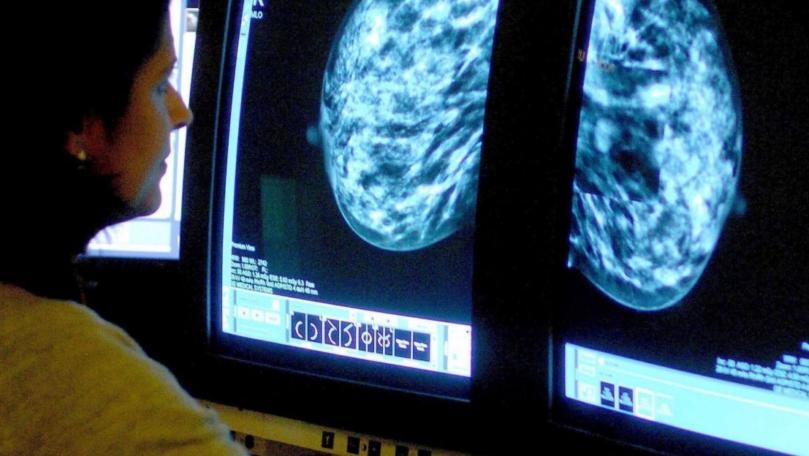
Postponing is one of the many vices of the human race. We put off everything, from confrontations to health checkups. Breast cancer is becoming an increasingly urgent issue. By 2050, an estimated 3.2 million new cases are expected worldwide, and 1.1 million women may die from the disease each year. Let’s stop running and start acting, shall we?Recognizing Early SignsIn an exclusive interview with MTV’s website, Dr. Ghassan Atallah explains that the most common early signs of breast cancer are painless lumps or areas of thickening in the breast that feel different from the surrounding tissue.“Women should perform a breast self-exam once a month, a few days after their periods. Postmenopausal women should choose the same day each month to check themselves,” he says.Dr. Atallah adds that women at average risk should start getting yearly mammograms at age 40. Women at higher risk, such as those with a strong family history of breast cancer, should begin yearly mammograms between the ages of 30 and 35, alternating with MRI scans every six months.“Young women should look out for new lumps or thickening that are usually painless, firm, and different from surrounding tissue. Changes in the size or shape of the breasts or nipples, and unusual nipple discharge, especially if bloody, should not be ignored,” he advises. “Swelling in the armpit or around the collarbone could indicate enlarged lymph nodes related to breast cancer.”Screening Recommendations and Effectiveness “Family history and genetics play a major role in breast cancer. Five to ten percent of cases are caused by inherited gene mutations, which in some cases can double or even multiply a woman’s lifetime risk,” he explains.“Current screening methods are reliable. Mammograms detect 85 to 90 percent of cases in older women and 75 to 85 percent overall, offering routine screening with a proven mortality benefit. Ultrasounds detect 70 to 85 percent of cases and are useful for women with dense breasts. MRIs are the most sensitive, detecting 90 to 95 percent of cases, especially in high-risk women,” he explains.Dr. Atallah urges anyone experiencing these symptoms to schedule a doctor’s visit promptly. “Men can also get breast cancer, although it is rare. It accounts for about one percent of all cases and usually occurs between the ages of 60 and 70,” he adds.He emphasizes that certain lifestyle changes can help reduce the risk of breast cancer: “Keeping a healthy weight, staying physically active, eating a balanced and nutritious diet, limiting red and processed meats and sugary or refined foods, and cutting back on alcohol and avoiding smoking can all lower your risk,” he says.Health issues sneak up when you least expect them to. They don’t wait for you, and neither should you. Your health is priceless. Pay attention, take action, and make yourself a priority.

10/29/2025 11:45:00 AM

Climate Tipping Points Being Crossed, Scientists Warn Ahead of COP30

Global warming is crossing dangerous thresholds sooner than expected with the world’s coral reefs now in an almost irreversible die-off, marking what scientists on Monday described as the first “tipping point” in climate-driven ecosystem collapse.The warning in the Global Tipping Points report by 160 researchers worldwide, which synthesizes groundbreaking science to estimate points of no return, comes just weeks ahead of this year's COP30 climate summit being held at the edge of the Amazon rainforest in Brazil.That same rainforest system is now at risk of collapsing once the average global temperature warms beyond just 1.5 degrees Celsius based on deforestation rates, the report said, revising down the estimated threshold for the Amazon.Also of concern if temperatures keep rising is the threat of disruption to the major ocean current called the Atlantic Meridional Overturning Circulation, or AMOC, which helps to ensure mild winters in northern Europe.“Change is happening fast now, tragically, in parts of the climate, the biosphere,” said environmental scientist Tim Lenton at the University of Exeter, who is the lead author of the report.Lenton noted positive signs when it came to phasing out the fossil fuels most responsible for climate change. Renewables, for example, accounted for more electricity generation than coal this year for the first time, according to data from the nonprofit think tank Ember.“Nobody wants to be just traumatized and disempowered,” Lenton said. “We still have some agency.”The scientists implored countries at November's COP30 to work toward bringing down climate-warming carbon emissions.Scientists have been surprised by how quickly changes are unfolding in nature, with average global temperatures already having warmed by 1.3-1.4 degrees Celsius (2.3 to 2.5 degrees Fahrenheit) above the preindustrial average, according to data from U.N. and EU science agencies.The last two years were Earth’s warmest on record, with marine heatwaves that stressed 84% of the world’s reefs to the point of bleaching and, in some cases, death. Coral reefs sustain about a quarter of marine life.For corals to recover, the world would need to drastically ramp up climate action to reverse temperatures back down to just 1 degree C above the preindustrial average, the scientists suggested.“The new report makes clear that each year there is an increase in the scope and magnitude of the negative impacts of climate change,” said Pep Canadell, a senior scientist at Australia’s CSIRO Climate Science Centre.The world is currently on track for about 3.1 degrees C of warming in this century, based on national policies.

10/13/2025 9:15:00 AM

This is how air pollution reaches the heart and brain

For the first time, researchers have observed direct evidence that fine air pollution particles can attach to red blood cells and travel through the bloodstream to various organs in the body.A new study conducted by Queen Mary University in London revealed a dangerous way that air pollution infiltrates the human body. Twelve volunteers participated in a controlled experiment, moving between a closed office environment and a busy street in central London while equipped with precise pollution-monitoring devices.The results showed that PM2.5 levels near busy roads were five times higher than indoors. Even more concerning, laboratory tests of blood samples revealed a significant increase in polluted particles attached to red blood cells, in some cases tripling.When eight of the volunteers repeated the experiment wearing FFP2 masks, no increase in particle attachment to blood was recorded, confirming the effectiveness of masks in protecting against the most dangerous air pollutants.The research team also identified the chemical composition of these particles, finding metals such as iron and copper from vehicle exhaust and silver and molybdenum from brake and tire friction.Professor Jonathan Greg warned that these particles “hitch a ride” on red blood cells, allowing them to reach any organ in the body, which may explain their direct link to heart and brain diseases. Professor Annie Johansen emphasized the need to tighten regulations to reduce pollution and recommended mask use, especially for those most at risk of health problems.These findings provide a new warning about the dangers of air pollution and reveal how its effects can reach inside our bodies in previously unknown ways.

10/4/2025 10:14:00 AM

Study on Apple Cider Vinegar and Weight Loss Withdrawn

An influential study claiming that drinking a small amount of apple cider vinegar every day helps people lose weight was retracted on Wednesday after an investigation found it contained multiple errors.The small clinical trial, which was published in the journal BMJ Nutrition, Prevention & Health last year, is currently cited in many online articles touting the much-hyped health benefits of apple cider vinegar.However, the study quickly attracted criticism from outside researchers, prompting the journal's publisher to launch an investigation.The investigators found statistical errors and could not replicate the study's results, leading to it being retracted, the BMJ Group said in a statement.The authors of the research, which was conducted in Lebanon, said in a statement the errors were "honest mistakes" but added that they agreed with the decision to retract.Rosemary Stanton, an Australian public health nutritionist who criticised the study when it was first published, told AFP she was glad it had finally been retracted."We should have a healthy degree of scepticism to something that sounds too good to be true," she said.After Netflix released a series called "Apple Cider Vinegar" in January about Australian wellness influencers, the common pantry item has become emblematic of unverified health claims promoted on social media.Stanton added that some of apple cider vinegar's other supposed health benefits were also not supported by evidence.Claims that it is a good source of nutrients such as potassium, calcium and magnesium are "false", she said."Because apple cider vinegar damages tooth enamel, if you do use it, always rinse your mouth thoroughly with water."Stanton also lamented that many people no longer got nutrition advice from experts, but instead from unqualified influencers who often profit from promoting or selling products.

9/24/2025 10:32:28 AM

{{ article.title }}

{{safeHTML(article.Text)}}

{{article.publishDate}}

Article Image

More

Ancient Carved Faces in Turkey Shed New Light on Neolithic Society

On the windswept hills overlooking Turkey’s vast southeastern plains, new archaeological discoveries are revealing how life might have looked 11,000 years ago when the world’s earliest communities began to emerge.The latest finds -- a stone figurine with stitched lips, carved stone faces and a black serpentinite bead with expressive faces on both sides -- offer clues about Neolithic beliefs and rituals.“The growing number of human sculptures can be read as a direct outcome of settled life,” Necmi Karul, the archaeologist leading the dig at Karahan Tepe, told AFP.“As communities became more sedentary, people gradually distanced themselves from nature and placed the human figure and the human experience at the centre of the universe,” he said, pointing to a human face carved onto a T-shaped pillar.The excavation is part of Turkey’s “Stone Hills” project, a government-backed initiative launched in 2020 across 12 sites in Sanliurfa province, which Culture Minister Nuri Ersoy has described as “the world’s Neolithic capital”.The project includes the UNESCO heritage site Gobekli Tepe -- “Potbelly Hill” in Turkish -- which is home to the oldest known megalithic structures in Upper Mesopotamia, where the late German archaeologist Klaus Schmidt began excavations in 1995.Explaining some of the new finds on display at Karahan Tepe’s visitor centre, Lee Clare of the German Archaeology Institute says they challenge long-held narratives about humanity’s shift from nomadic hunter-gatherer life to early settlements.“Every building we study gives us a small glimpse into someone’s life. Every layer we excavate brings us closer to an individual -- we can almost touch that person, through their bones. We’re gaining insights into their belief systems,” he said.The past five years have yielded “a wonderful amount of data coming out of all these new sites,” the archaeologist told AFP.But it was impossible to know everything. “We don’t have any written records, obviously, because it’s prehistory,” said Clare, who has worked at Gobekli Tepe since 2013.Identifying who the statues or figurines represented was probably impossible, given they dated back to “a period before writing, around 10,000 years ago”, said Karul, who is also leading the dig at Gobekli Tepe and coordinator of the Stone Hills project.“But as the number of such finds increases and as we learn more about the contexts in which they appear, we gain the opportunity to conduct statistical analyses and make meaningful comparisons.”The settlements began to appear after the last Ice Age, he said.“The changing environment created fertile conditions, allowing people to feed themselves without constantly going hunting. This, in turn, supported population growth and encouraged the development and expansion of permanent settlements in the area.”As communities started to settle, new social dynamics emerged, Clare said.“Once people produced surplus, they got rich and poor,” he said, indicating the first hints of social hierarchy.“What we see here is the beginning of that process. In many ways, we are on a slippery slope that leads toward the modern world.”As the excavations progress, they will transform understanding of the Neolithic, with each site earning its own place in scientific history, says Emre Guldogan of Istanbul University, lead archaeologist at the nearby Sefer Tepe site.“Karahan Tepe and the wider Stone Hills project show a highly organised society with its own symbolic world and belief structures” overturning earlier ideas of a “primitive” Neolithic world, he said.“These communities shared traits but also developed clear cultural differences,” he said.At Karahan Tepe, human symbolism is widely seen whereas in Gobekli Tepe, animal imagery is more dominant.Archaeologists say findings at both sites show each community depicting their living environments in different ways.“Each new discovery raises fresh questions aimed at understanding the people behind these creations,” Guldogan said.The recent archaeological discoveries have also broadened the appeal of a region known primarily as the place where Abraham once settled, a figure revered in Judaism, Christianity and Islam.“Before the excavations began at Karahan Tepe and other sites, the area mainly attracted religious tour groups, drawn largely by its association with the prophet Abraham,” tourist guide Yakup Bedlek said.“With the emergence of new archaeological zones, a more varied mix of tourists are visiting the region.”

12/4/2025 12:15:00 PM

Breast Cancer Doesn’t Wait, and You Shouldn’t Either

Postponing is one of the many vices of the human race. We put off everything, from confrontations to health checkups. Breast cancer is becoming an increasingly urgent issue. By 2050, an estimated 3.2 million new cases are expected worldwide, and 1.1 million women may die from the disease each year. Let’s stop running and start acting, shall we?Recognizing Early SignsIn an exclusive interview with MTV’s website, Dr. Ghassan Atallah explains that the most common early signs of breast cancer are painless lumps or areas of thickening in the breast that feel different from the surrounding tissue.“Women should perform a breast self-exam once a month, a few days after their periods. Postmenopausal women should choose the same day each month to check themselves,” he says.Dr. Atallah adds that women at average risk should start getting yearly mammograms at age 40. Women at higher risk, such as those with a strong family history of breast cancer, should begin yearly mammograms between the ages of 30 and 35, alternating with MRI scans every six months.“Young women should look out for new lumps or thickening that are usually painless, firm, and different from surrounding tissue. Changes in the size or shape of the breasts or nipples, and unusual nipple discharge, especially if bloody, should not be ignored,” he advises. “Swelling in the armpit or around the collarbone could indicate enlarged lymph nodes related to breast cancer.”Screening Recommendations and Effectiveness “Family history and genetics play a major role in breast cancer. Five to ten percent of cases are caused by inherited gene mutations, which in some cases can double or even multiply a woman’s lifetime risk,” he explains.“Current screening methods are reliable. Mammograms detect 85 to 90 percent of cases in older women and 75 to 85 percent overall, offering routine screening with a proven mortality benefit. Ultrasounds detect 70 to 85 percent of cases and are useful for women with dense breasts. MRIs are the most sensitive, detecting 90 to 95 percent of cases, especially in high-risk women,” he explains.Dr. Atallah urges anyone experiencing these symptoms to schedule a doctor’s visit promptly. “Men can also get breast cancer, although it is rare. It accounts for about one percent of all cases and usually occurs between the ages of 60 and 70,” he adds.He emphasizes that certain lifestyle changes can help reduce the risk of breast cancer: “Keeping a healthy weight, staying physically active, eating a balanced and nutritious diet, limiting red and processed meats and sugary or refined foods, and cutting back on alcohol and avoiding smoking can all lower your risk,” he says.Health issues sneak up when you least expect them to. They don’t wait for you, and neither should you. Your health is priceless. Pay attention, take action, and make yourself a priority.

10/29/2025 11:45:00 AM

Climate Tipping Points Being Crossed, Scientists Warn Ahead of COP30

Global warming is crossing dangerous thresholds sooner than expected with the world’s coral reefs now in an almost irreversible die-off, marking what scientists on Monday described as the first “tipping point” in climate-driven ecosystem collapse.The warning in the Global Tipping Points report by 160 researchers worldwide, which synthesizes groundbreaking science to estimate points of no return, comes just weeks ahead of this year's COP30 climate summit being held at the edge of the Amazon rainforest in Brazil.That same rainforest system is now at risk of collapsing once the average global temperature warms beyond just 1.5 degrees Celsius based on deforestation rates, the report said, revising down the estimated threshold for the Amazon.Also of concern if temperatures keep rising is the threat of disruption to the major ocean current called the Atlantic Meridional Overturning Circulation, or AMOC, which helps to ensure mild winters in northern Europe.“Change is happening fast now, tragically, in parts of the climate, the biosphere,” said environmental scientist Tim Lenton at the University of Exeter, who is the lead author of the report.Lenton noted positive signs when it came to phasing out the fossil fuels most responsible for climate change. Renewables, for example, accounted for more electricity generation than coal this year for the first time, according to data from the nonprofit think tank Ember.“Nobody wants to be just traumatized and disempowered,” Lenton said. “We still have some agency.”The scientists implored countries at November's COP30 to work toward bringing down climate-warming carbon emissions.Scientists have been surprised by how quickly changes are unfolding in nature, with average global temperatures already having warmed by 1.3-1.4 degrees Celsius (2.3 to 2.5 degrees Fahrenheit) above the preindustrial average, according to data from U.N. and EU science agencies.The last two years were Earth’s warmest on record, with marine heatwaves that stressed 84% of the world’s reefs to the point of bleaching and, in some cases, death. Coral reefs sustain about a quarter of marine life.For corals to recover, the world would need to drastically ramp up climate action to reverse temperatures back down to just 1 degree C above the preindustrial average, the scientists suggested.“The new report makes clear that each year there is an increase in the scope and magnitude of the negative impacts of climate change,” said Pep Canadell, a senior scientist at Australia’s CSIRO Climate Science Centre.The world is currently on track for about 3.1 degrees C of warming in this century, based on national policies.

10/13/2025 9:15:00 AM

This is how air pollution reaches the heart and brain

For the first time, researchers have observed direct evidence that fine air pollution particles can attach to red blood cells and travel through the bloodstream to various organs in the body.A new study conducted by Queen Mary University in London revealed a dangerous way that air pollution infiltrates the human body. Twelve volunteers participated in a controlled experiment, moving between a closed office environment and a busy street in central London while equipped with precise pollution-monitoring devices.The results showed that PM2.5 levels near busy roads were five times higher than indoors. Even more concerning, laboratory tests of blood samples revealed a significant increase in polluted particles attached to red blood cells, in some cases tripling.When eight of the volunteers repeated the experiment wearing FFP2 masks, no increase in particle attachment to blood was recorded, confirming the effectiveness of masks in protecting against the most dangerous air pollutants.The research team also identified the chemical composition of these particles, finding metals such as iron and copper from vehicle exhaust and silver and molybdenum from brake and tire friction.Professor Jonathan Greg warned that these particles “hitch a ride” on red blood cells, allowing them to reach any organ in the body, which may explain their direct link to heart and brain diseases. Professor Annie Johansen emphasized the need to tighten regulations to reduce pollution and recommended mask use, especially for those most at risk of health problems.These findings provide a new warning about the dangers of air pollution and reveal how its effects can reach inside our bodies in previously unknown ways.

10/4/2025 10:14:00 AM

{{ article.title }}

{{safeHTML(article.Text)}}

{{ article.publishDate }}

Article Image

More