




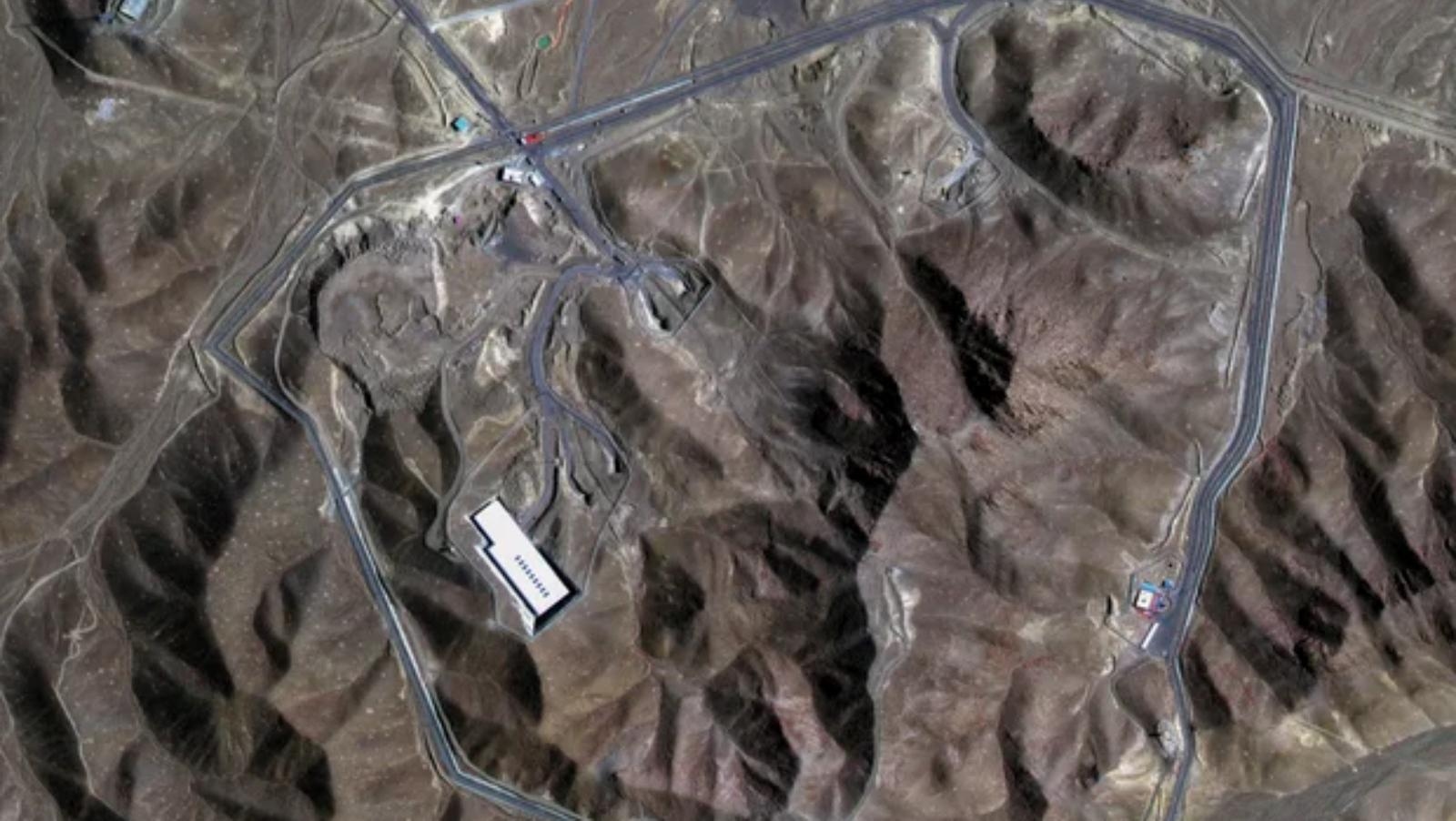

New satellite photos show the aftermath of the US military strike that dropped multiple 30,000-pound "bunker-buster" bombs on Iran's Fordo nuclear facility and hit two other key locations in Iran's nuclear program.
The stealth US mission, dubbed "Operation Midnight Hammer," struck three nuclear facilities in Iran — Fordo, Natanz and Isfahan — in the early hours of Sunday local time.
Gen. Dan Caine, the chairman of the Joint Chiefs of Staff, said at a Pentagon briefing Sunday that seven B-2 Spirit bombers each carried two of the bombs known as GBU-57 Massive Ordnance Penetrators, or MOPs. Over 25 minutes, a total of 14 MOPs were dropped on two target areas at Fordo and Natanz, while Tomahawk missiles from a US submarine targeted the Isfahan site, he said.
He said it was the first time those massive bombs have ever been used in an operation.
"Final battle damage will take some time, but initial battle damage assessments indicate that all three sites sustained extremely severe damage and destruction," Caine said.
Satellite photos show impact of strikes on Fordo
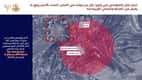
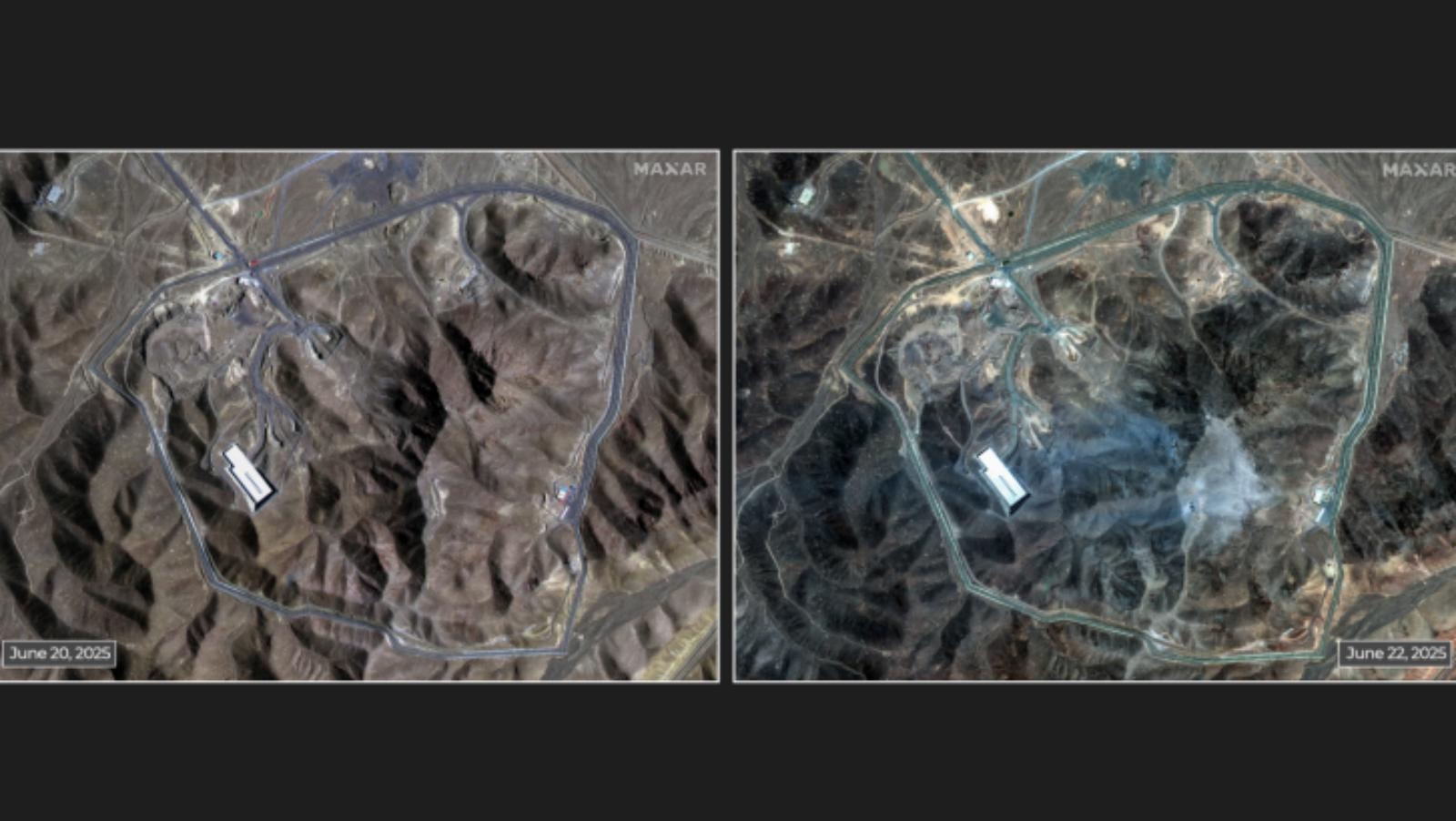
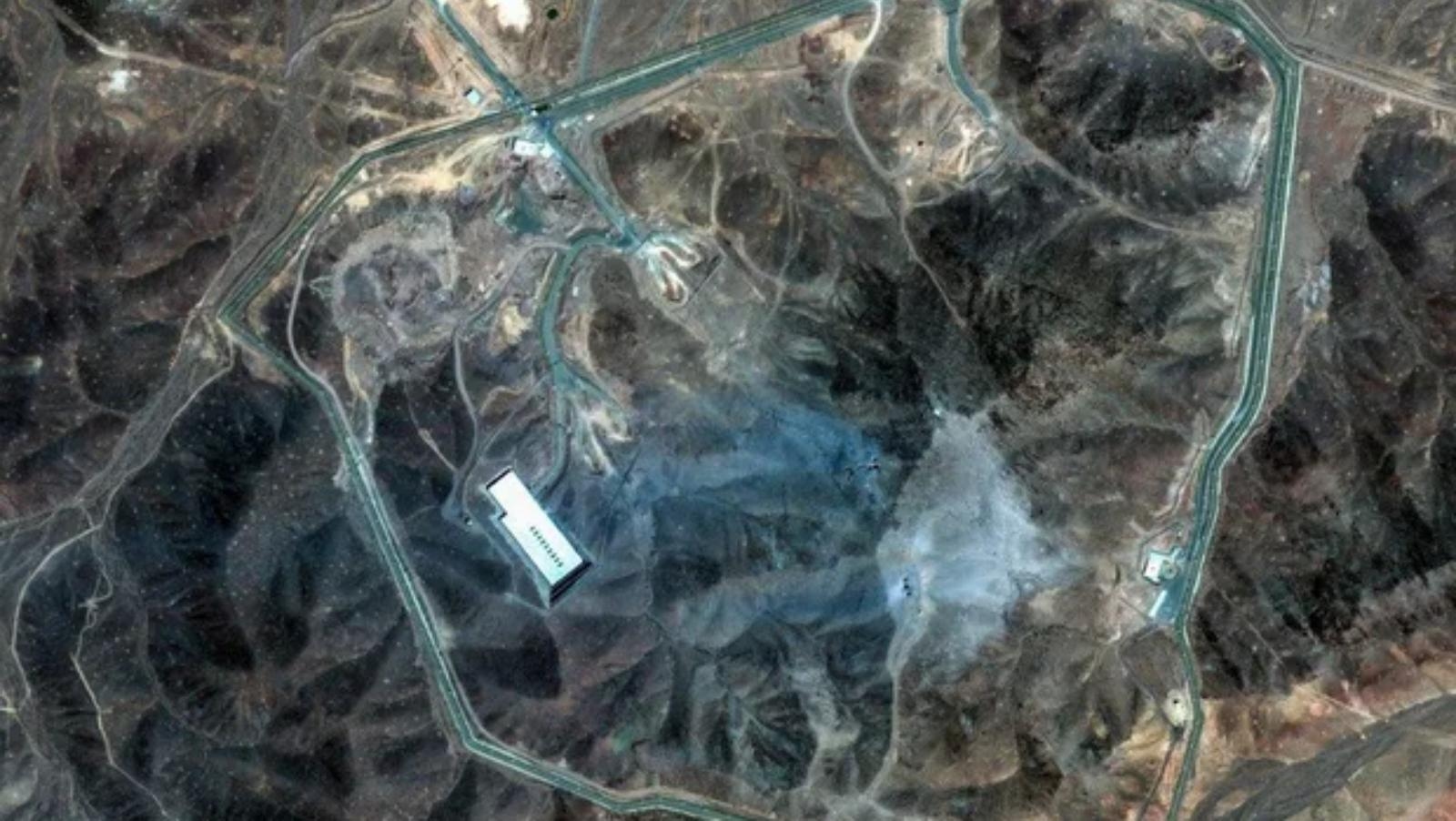
Satellite images from Maxar Technologies, taken Sunday after the strikes, show damage to the mountainside where the underground nuclear site at Fordo is buried about 300 feet down. They can be compared to images of the same location taken before the strikes.
A layer of ash caused by the airstrikes can be seen across a large swath of the area.
The images by Maxar show several large diameter holes or craters on the top of the ridge over the underground complex.
Additionally, several of the tunnel entrances that lead to the underground facility appear blocked by dirt following the strikes.
Asked at the briefing whether any of Iran's nuclear capability remains, Caine said, "I think (battle damage assessment) is still pending, and it would be way too early for me to comment on what may or may not still be there."
Iran has yet to offer a damage assessment of the site. The United Nations' International Atomic Energy Agency said in a social media post that it had seen "no increase in off-site radiation levels" in the wake of the U.S. strikes.
In a statement on Sunday to the U.N. Security Council, IAEA Director General Rafael Mariano Grossi said his team was unable to assess the underground damage at Fordo. Following the attacks, he said there's a "window of opportunity to return to dialogue and diplomacy."
"If that window closes, violence and destruction could reach unthinkable levels and the global non-proliferation regime as we know it could crumble and fall," Grossi said.
The stealth US mission, dubbed "Operation Midnight Hammer," struck three nuclear facilities in Iran — Fordo, Natanz and Isfahan — in the early hours of Sunday local time.
Gen. Dan Caine, the chairman of the Joint Chiefs of Staff, said at a Pentagon briefing Sunday that seven B-2 Spirit bombers each carried two of the bombs known as GBU-57 Massive Ordnance Penetrators, or MOPs. Over 25 minutes, a total of 14 MOPs were dropped on two target areas at Fordo and Natanz, while Tomahawk missiles from a US submarine targeted the Isfahan site, he said.
He said it was the first time those massive bombs have ever been used in an operation.
"Final battle damage will take some time, but initial battle damage assessments indicate that all three sites sustained extremely severe damage and destruction," Caine said.
Satellite photos show impact of strikes on Fordo
Satellite images from Maxar Technologies, taken Sunday after the strikes, show damage to the mountainside where the underground nuclear site at Fordo is buried about 300 feet down. They can be compared to images of the same location taken before the strikes.
A layer of ash caused by the airstrikes can be seen across a large swath of the area.
The images by Maxar show several large diameter holes or craters on the top of the ridge over the underground complex.
Additionally, several of the tunnel entrances that lead to the underground facility appear blocked by dirt following the strikes.
Asked at the briefing whether any of Iran's nuclear capability remains, Caine said, "I think (battle damage assessment) is still pending, and it would be way too early for me to comment on what may or may not still be there."
Iran has yet to offer a damage assessment of the site. The United Nations' International Atomic Energy Agency said in a social media post that it had seen "no increase in off-site radiation levels" in the wake of the U.S. strikes.
In a statement on Sunday to the U.N. Security Council, IAEA Director General Rafael Mariano Grossi said his team was unable to assess the underground damage at Fordo. Following the attacks, he said there's a "window of opportunity to return to dialogue and diplomacy."
"If that window closes, violence and destruction could reach unthinkable levels and the global non-proliferation regime as we know it could crumble and fall," Grossi said.