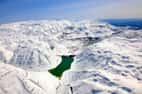






For years, visitors would venture up Mount Sinai with a Bedouin guide to watch the sunrise over the pristine, rocky landscape or go on other Bedouin-led hikes.
Now one of Egypt's most sacred places - revered by Jews, Christians and Muslims - is at the heart of an unholy row over plans to turn it into a new tourism mega-project.
Known locally as Jabal Musa, Mount Sinai is where Moses is said to have been given the Ten Commandments. Many also believe that this is the place where, according to the Bible and the Quran, God spoke to the prophet from the burning bush.
The 6th century St Catherine's Monastery, run by the Greek Orthodox Church, is also there - and seemingly its monks will stay on now that Egyptian authorities, under Greek pressure, have denied wanting to close it.
However, there is still deep concern about how the long-isolated, desert location - a Unesco World Heritage site comprising the monastery, town and mountain - is being transformed. Luxury hotels, villas and shopping bazaars are under construction there.
It is also home to a traditional Bedouin community, the Jebeleya tribe. Already the tribe, known as the Guardians of St Catherine, have had their homes and tourist eco-camps demolished with little or no compensation. They have even been forced to take bodies out of their graves in the local cemetery to make way for a new car park.
The project may have been presented as desperately needed sustainable development which will boost tourism, but it has also been imposed on the Bedouin against their will, says Ben Hoffler, a British travel writer who has worked closely with Sinai tribes.
"This is not development as the Jebeleya see it or asked for it, but how it looks when imposed top-down to serve the interests of outsiders over those of the local community," he told the BBC.
"A new urban world is being built around a Bedouin tribe of nomadic heritage," he added. "It's a world they have always chosen to remain detached from, to whose construction they did not consent, and one that will change their place in their homeland forever."
Locals, who number about 4,000, are unwilling to speak directly about the changes.
So far, Greece is the foreign power which has been most vocal about the Egyptian plans, because of its connection to the monastery.
Tensions between Athens and Cairo flared up after an Egyptian court ruled in May that St Catherine's - the world's oldest continuously used Christian monastery - lies on state land.
After a decades-long dispute, judges said that the monastery was only "entitled to use" the land it sits on and the archaeological religious sites which dot its surroundings.
Archbishop Ieronymos II of Athens, head of the Church of Greece, was quick to denounce the ruling.
"The monastery's property is being seized and expropriated. This spiritual beacon of Orthodoxy and Hellenism is now facing an existential threat," he said in a statement.
In a rare interview, St Catherine's longtime Archbishop Damianos told a Greek newspaper the decision was a "grave blow for us... and a disgrace". His handling of the affair led to bitter divisions between the monks and his recent decision to step down.
The Greek Orthodox Patriarchate of Jerusalem pointed out that the holy site - over which it has ecclesiastical jurisdiction - had been granted a letter of protection by the Prophet Muhammad himself.
It said that the Byzantine monastery - which unusually also houses a small mosque built in the Fatimid era - was "an enshrinement of peace between Christians and Muslims and a refuge of hope for a world mired by conflict".
While the controversial court ruling remains in place, a flurry of diplomacy ultimately culminated in a joint declaration between Greece and Egypt ensuring the protection of St Catherine's Greek Orthodox identity and cultural heritage.
Now one of Egypt's most sacred places - revered by Jews, Christians and Muslims - is at the heart of an unholy row over plans to turn it into a new tourism mega-project.
Known locally as Jabal Musa, Mount Sinai is where Moses is said to have been given the Ten Commandments. Many also believe that this is the place where, according to the Bible and the Quran, God spoke to the prophet from the burning bush.
The 6th century St Catherine's Monastery, run by the Greek Orthodox Church, is also there - and seemingly its monks will stay on now that Egyptian authorities, under Greek pressure, have denied wanting to close it.
However, there is still deep concern about how the long-isolated, desert location - a Unesco World Heritage site comprising the monastery, town and mountain - is being transformed. Luxury hotels, villas and shopping bazaars are under construction there.
It is also home to a traditional Bedouin community, the Jebeleya tribe. Already the tribe, known as the Guardians of St Catherine, have had their homes and tourist eco-camps demolished with little or no compensation. They have even been forced to take bodies out of their graves in the local cemetery to make way for a new car park.
The project may have been presented as desperately needed sustainable development which will boost tourism, but it has also been imposed on the Bedouin against their will, says Ben Hoffler, a British travel writer who has worked closely with Sinai tribes.
"This is not development as the Jebeleya see it or asked for it, but how it looks when imposed top-down to serve the interests of outsiders over those of the local community," he told the BBC.
"A new urban world is being built around a Bedouin tribe of nomadic heritage," he added. "It's a world they have always chosen to remain detached from, to whose construction they did not consent, and one that will change their place in their homeland forever."
Locals, who number about 4,000, are unwilling to speak directly about the changes.
So far, Greece is the foreign power which has been most vocal about the Egyptian plans, because of its connection to the monastery.
Tensions between Athens and Cairo flared up after an Egyptian court ruled in May that St Catherine's - the world's oldest continuously used Christian monastery - lies on state land.
After a decades-long dispute, judges said that the monastery was only "entitled to use" the land it sits on and the archaeological religious sites which dot its surroundings.
Archbishop Ieronymos II of Athens, head of the Church of Greece, was quick to denounce the ruling.
"The monastery's property is being seized and expropriated. This spiritual beacon of Orthodoxy and Hellenism is now facing an existential threat," he said in a statement.
In a rare interview, St Catherine's longtime Archbishop Damianos told a Greek newspaper the decision was a "grave blow for us... and a disgrace". His handling of the affair led to bitter divisions between the monks and his recent decision to step down.
The Greek Orthodox Patriarchate of Jerusalem pointed out that the holy site - over which it has ecclesiastical jurisdiction - had been granted a letter of protection by the Prophet Muhammad himself.
It said that the Byzantine monastery - which unusually also houses a small mosque built in the Fatimid era - was "an enshrinement of peace between Christians and Muslims and a refuge of hope for a world mired by conflict".
While the controversial court ruling remains in place, a flurry of diplomacy ultimately culminated in a joint declaration between Greece and Egypt ensuring the protection of St Catherine's Greek Orthodox identity and cultural heritage.