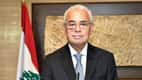






The Ministry of Social Affairs and the Ministry of State for Technology and Artificial Intelligence signed a Memorandum of Understanding (MoU) to modernize the ministry’s digital infrastructure and integrate it into Lebanon’s national digital transformation framework — a reform milestone aimed at enhancing efficiency, transparency, and sustainability in social services.
The signing ceremony, held at the Ministry of Social Affairs, was attended by Minister of Social Affairs Haneen El-Sayyed, Minister of State for Technology and AI Dr. Kamal Shehadeh, representatives of the European Union, World Food Programme, the United Kingdom, and several ambassadors and international partners.
Minister El-Sayyed emphasized that “technological advancement is no longer a luxury but a fundamental tool for achieving social justice and good governance,” describing the MoU as “a genuine reform step toward modernizing public administration and placing citizens at the center of policymaking.”
She outlined three pillars of the ministry’s digital reform plan:
• A Unified Social Registry integrating beneficiary data for fair and transparent support,
• A network linking 165 social development centers for real-time information exchange,
• And a Core Management Information System (Core MIS) to streamline internal operations and decision-making.
Minister Shehadeh described the MoU as “a concrete step toward building a truly digital state,” explaining that the purpose of establishing the Technology and AI Ministry was “to create an integrated digital ecosystem where ministries work collaboratively, not in silos.”
He revealed that joint teams had developed a Digital Strategy for the Ministry of Social Affairs (2025–2027), reviewing all social platforms, including DAEM and NDA, to unify data, eliminate duplication, and align with Lebanon’s upcoming national digital infrastructure, which will connect to digital ID, e-payments, and government portals.
Both ministers expressed gratitude to the EU, WFP, and the UK for their continued support, reaffirming that this partnership represents “a true national model for digital governance, where technology serves development, and development serves people.”
The signing ceremony, held at the Ministry of Social Affairs, was attended by Minister of Social Affairs Haneen El-Sayyed, Minister of State for Technology and AI Dr. Kamal Shehadeh, representatives of the European Union, World Food Programme, the United Kingdom, and several ambassadors and international partners.
Minister El-Sayyed emphasized that “technological advancement is no longer a luxury but a fundamental tool for achieving social justice and good governance,” describing the MoU as “a genuine reform step toward modernizing public administration and placing citizens at the center of policymaking.”
She outlined three pillars of the ministry’s digital reform plan:
• A Unified Social Registry integrating beneficiary data for fair and transparent support,
• A network linking 165 social development centers for real-time information exchange,
• And a Core Management Information System (Core MIS) to streamline internal operations and decision-making.
Minister Shehadeh described the MoU as “a concrete step toward building a truly digital state,” explaining that the purpose of establishing the Technology and AI Ministry was “to create an integrated digital ecosystem where ministries work collaboratively, not in silos.”
He revealed that joint teams had developed a Digital Strategy for the Ministry of Social Affairs (2025–2027), reviewing all social platforms, including DAEM and NDA, to unify data, eliminate duplication, and align with Lebanon’s upcoming national digital infrastructure, which will connect to digital ID, e-payments, and government portals.
Both ministers expressed gratitude to the EU, WFP, and the UK for their continued support, reaffirming that this partnership represents “a true national model for digital governance, where technology serves development, and development serves people.”