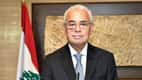






Arab League’s Summit this year will definitely be recorded in history as “Syria’s Assad” has lost his diplomatic war for his countrymen rivals. Today, Ahmad Moaz Al Khatib, whose resignation as head of the Syrian National Coalition is still pending, has filled Syria’s vacant seat, replacing its embattled president.
The Syrian opposition leader, taking Syria's seat at an Arab summit for the first time said the United States should use Patriot missiles to protect rebel-held areas from President Bashar al-Assad's airpower.
Moaz Alkhatib, a Sunni Muslim cleric, took over Syria's
vacant chair at the Arab League summit in Doha despite announcing on Sunday (March 24) that he would step down as leader of the Syrian National Coalition.
He said the insurgents have few weapons to counter Assad's helicopter gunships and warplanes.
"The Syrian regime is the one who refuses any solution to the crisis, we welcome any political solution that can protect peoples’ lives and avoids more destruction," Alkhatib told the summit.
Alkhatib said he had asked U.S. Secretary of State John
Kerry for U.S. forces to help defend rebel-controlled northern parts of Syria with Patriot surface-to-air missiles.
"We thank all world governments but I say that the role of the United States is much bigger than that (financial support). I have asked Mr.Kerry to extend the umbrella of the Patriot missiles to cover the Syrian north and he promised to study the subject. We are still waiting for a decision from NATO to protect people's lives, not to fight but to protect lives, "said Alkhatib.
The emir of Qatar, a strong supporter of the struggle to topple Assad, asked his fellow-Arab leaders to invite the coalition delegation to represent Syria formally at the summit, despite the internal divisions plaguing the opposition.
The Arab League suspended Syria in November 2011 in protest at its use of violence against civilians to quell dissent.
In his opening speech, Qatar's Sheikh Hamad bin Khalifa al-Thani urged the U.N. Security Council to stop the "oppression and repression of the people" in Syria, halt the bloodshed and "present those responsible for these crimes against their people to international justice".
The United Nations says about 70,000 people have been killed in a conflict that began with peaceful anti-Assad protests and turned into an increasingly sectarian armed insurrection.
The war in Syria has divided world powers, paralyzing action at the Security Council. The Arab world is also split, with Saudi Arabia and Qatar the most fervent foes of Assad, and Iraq, Algeria and Lebanon the most resistant to calls for his removal.